What Stuck With Us From InMotion 2026
AI, craft, play and the value of making things just to make them.
After two days at InMotion, we came back to the studio with plenty to talk about.
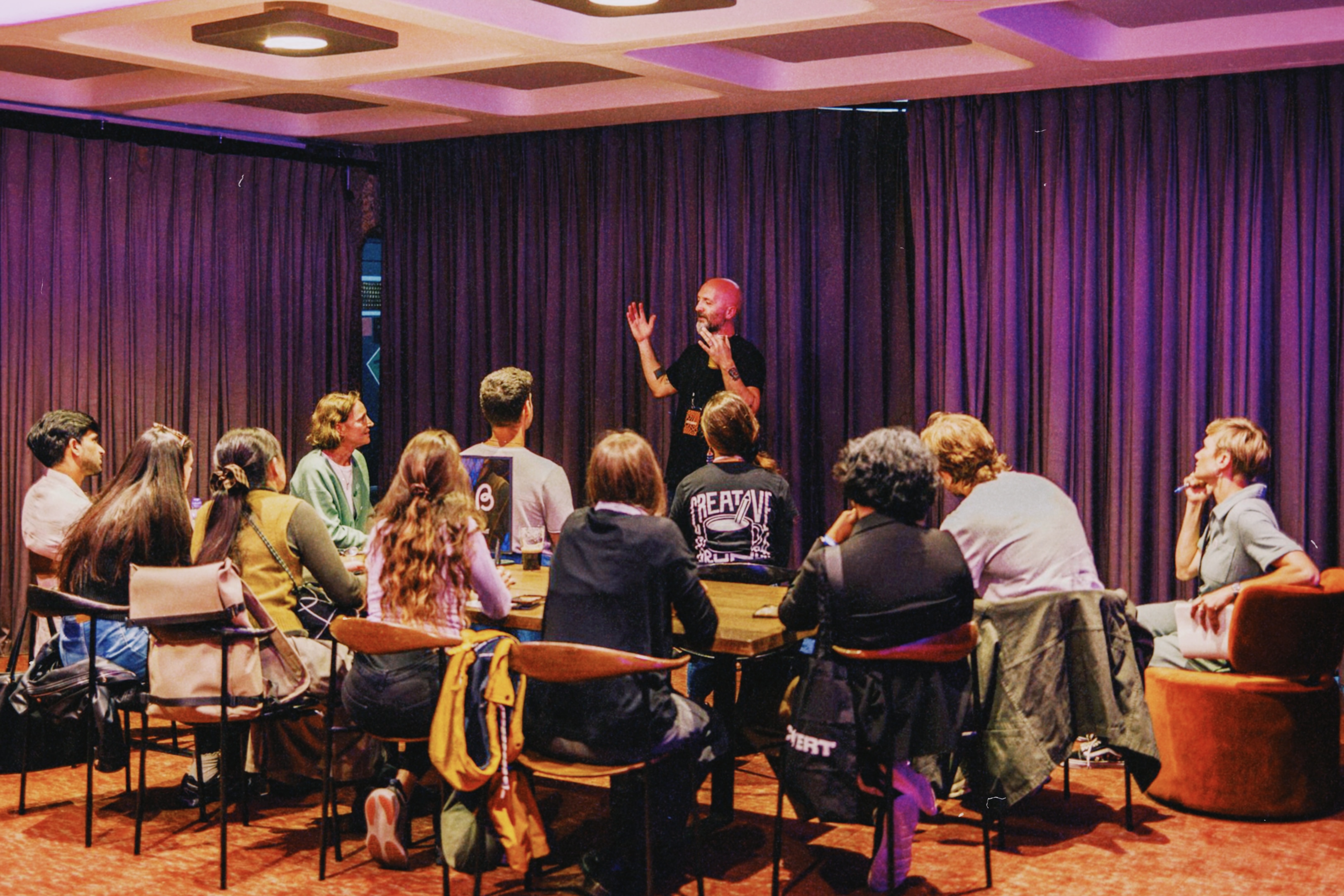
Alongside the talks, workshops and our stint in the Industry Garden, one of the most valuable parts of the event was simply being surrounded by the wider creative community - catching up with familiar faces, meeting new ones and seeing how other studios and artists are thinking about their practice.
Seven days later, we got the Buff team around a table to unpack what had actually stuck.
There were a lot of thoughts. Some useful, some less useful. But eventually, we found three conversations we kept coming back to: AI and craft, working across disciplines, and making more room to play.
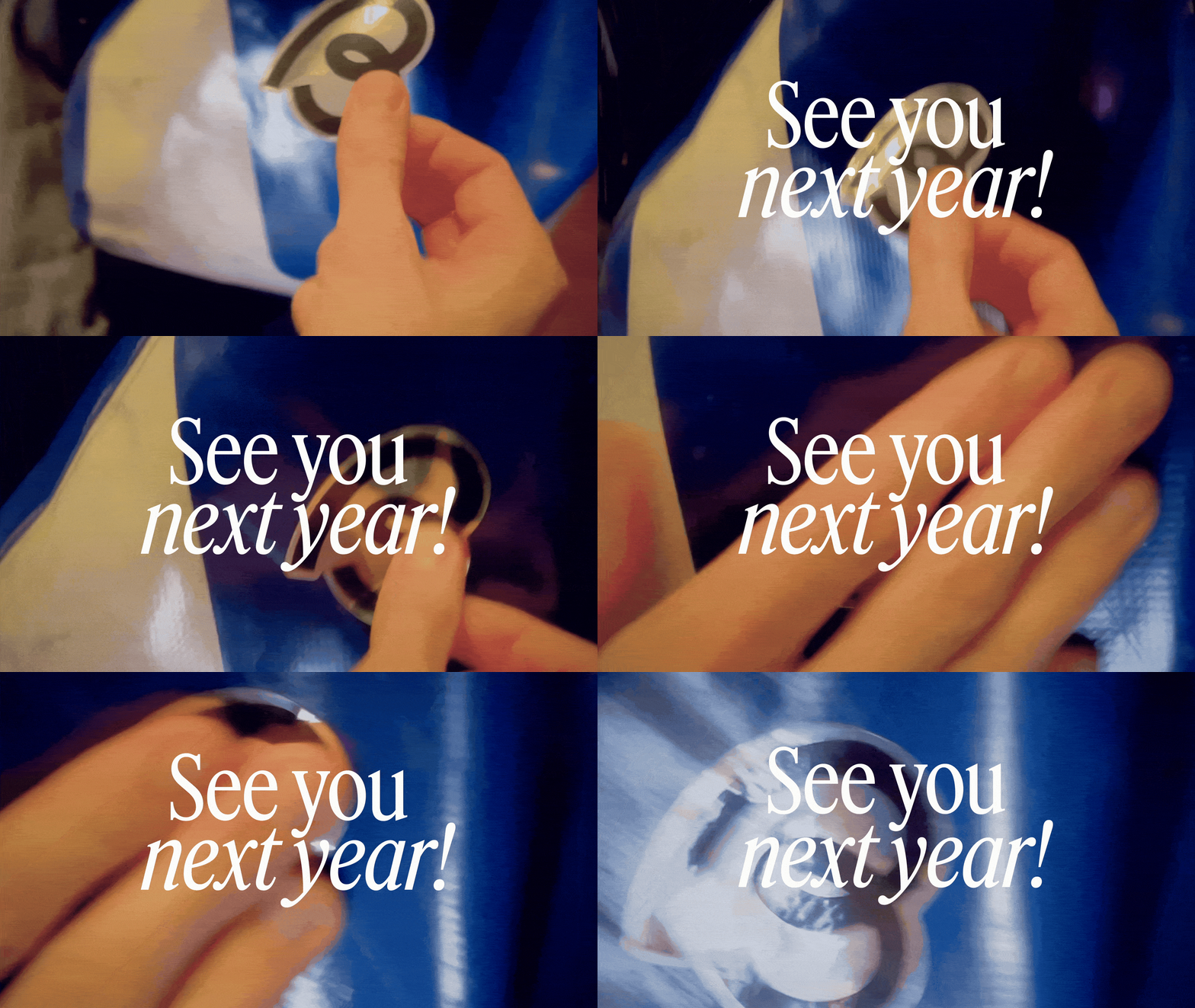
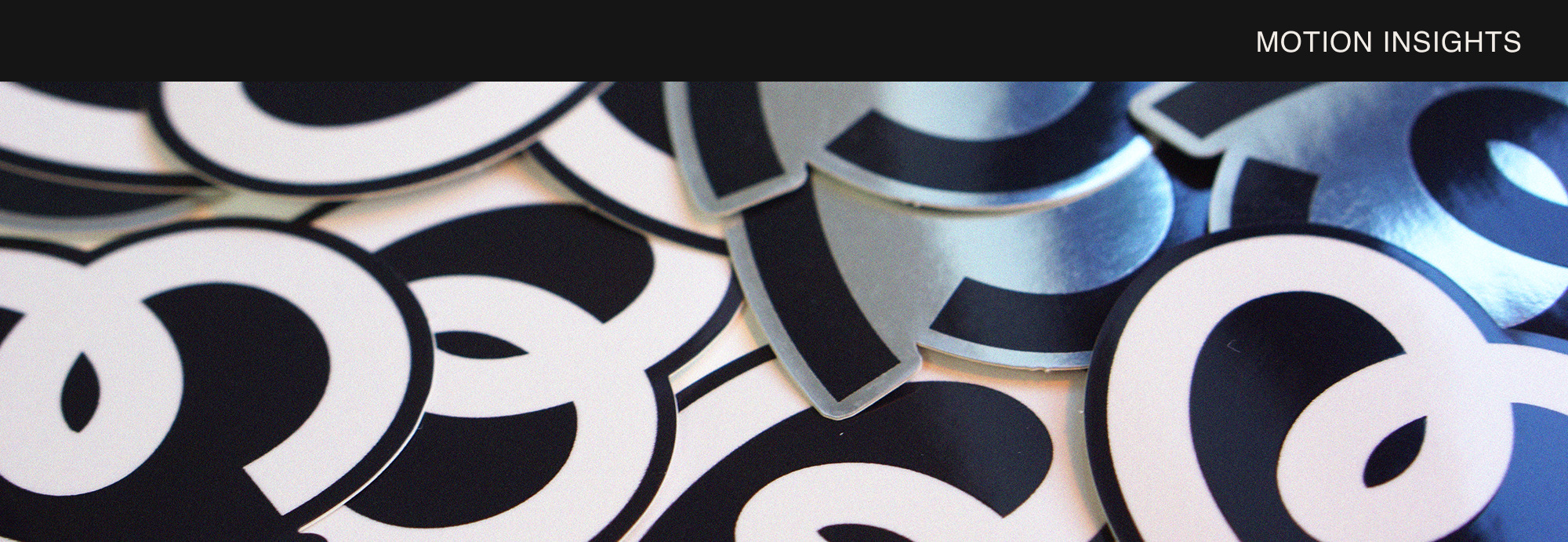
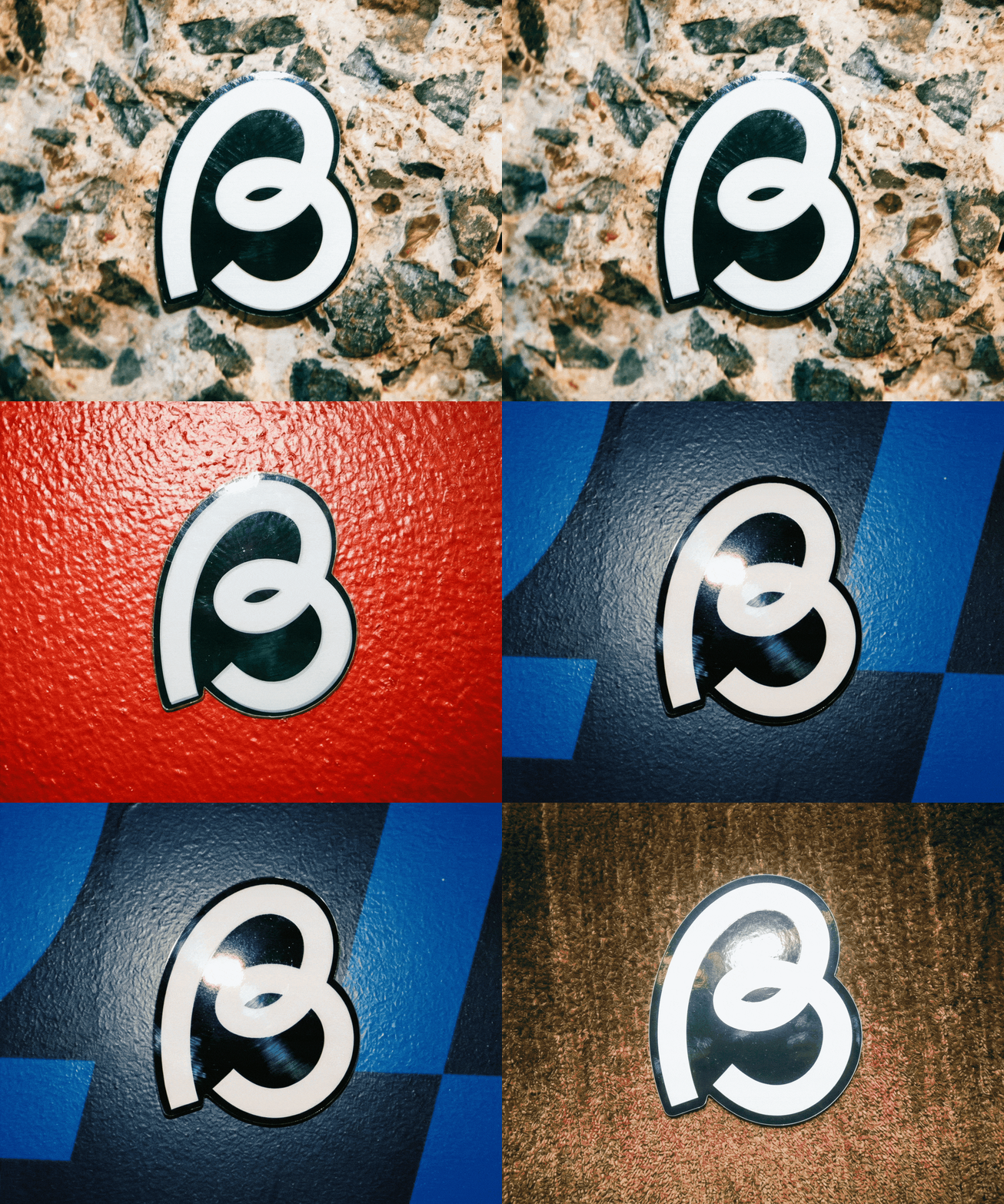
Turns out, quite a lot stuck. Not to mention a few Buff stickers around the Barbican.

AI. Obviously.
It would be difficult to come back from a creative industry event in 2026 without talking about AI.
One moment that stuck with us came from the We Are Better Than This talk, where we heard about kids beginning to use ‘AI’ as slang for something rubbish - think, “those trainers are so AI.”
Funny, but also pretty telling.
The talk also touched on generative AI entering schools, which raised a bigger question for us: if you can get to a polished looking result almost instantly, what happens to all the bad drawings, failed ideas and experiments along the way?
Because those aren't necessarily inefficiencies in the creative process. They're how you develop one.
At the same time, there was a noticeable shift in how the industry was talking about these tools. Last year, as Luke put it, “it was as if AI didn't exist.” This year, the conversation felt a little more open.
Buck were particularly transparent about where generative elements had been used alongside traditional processes, while keeping human judgement and craft at the centre of the work.
Perhaps that's where the interesting bit sits: there's a difference between using generative tools to skip learning a craft and using them as one tool within an already developed creative practice.
We didn't solve the AI debate around the table - if only - but we did leave with a useful question:
What are we gaining, what might we be skipping, and who's still making the creative decisions?

You don't have to stay in one lane.
Another theme that kept appearing across InMotion was how many of the creatives we admired worked across multiple mediums.
Drawing, sculpture, paper, 2D, 3D, code, physical materials - different practices constantly feeding back into one another.
Lawrie described it as the value of being a “jack of all trades rather than master of one.” Not because everyone needs to become brilliant at everything, but because doing something completely different can change how you approach the thing you do every day.
It also got us thinking about the idea of having a style.
There can be a lot of pressure, particularly early in a creative career, to figure out what your work looks like. Find your thing. Develop your USP. Make yourself recognizable.
But maybe style is more interesting when it emerges rather than being decided.
You draw, animate, photograph, sculpt, write, make strange little things and follow whatever interests you. Eventually, certain tendencies start showing up.
Your work begins to look like yours because you made it, not because you've been trying to make everything look the same.
And maybe being difficult to neatly categorise isn't such a bad thing.

Get away from the screen.
This was probably our favourite takeaway.
A few of the talks showed teams stepping away from the screen during the creative process - cutting up paper, arranging shapes, testing materials and experimenting with movement before committing to a final direction.
Obviously, we're not about to add an elaborate craft workshop to every two-week turnaround. But the principle behind it feels useful. Could there be half an hour at the beginning of the right project where everyone just sits down and makes things?
No polished outcome. No client deliverable. No expectation that what you make even gets used. Just play.
Making space for that kind of experimentation is part of a bigger conversation we've been having around studio culture and how the environment around the work ultimately shapes the work itself.
We already try to build experimentation into projects through things like early motion tests, but there was something refreshing about seeing that idea pushed beyond our usual tools.
The conversation quickly expanded into free writing, drawing, physical making, bringing external specialists into the studio and generally doing creative things that don't need an immediate purpose.
At one point this resulted in the suggestion of getting an origami master in.
We're not ruling it out.
Because the interesting thing about making without an expected output is that you don't know where it will lead. Something completely irrelevant today might become the reference you need six months from now.
What we're taking back to Buff.
If there was one thread connecting all of these conversations, it was the importance of protecting the process behind the work.
New tools can expand what's possible. Working across disciplines can broaden how we think. And sometimes stepping away from the expected output entirely can lead somewhere much more interesting.
So we're coming back from InMotion wanting to make a little more room for that - more experimentation, more learning from people outside our immediate disciplines, and more opportunities to make things without already knowing exactly where they'll end up.
Because better creative work doesn't necessarily come from finding more shortcuts.
Sometimes it comes from giving ourselves more room to play.