Motion Design Has a Physics Problem

When Motion Design Ignores Physics, Audiences Notice
We recently sat down with the Buff design team for a roundtable session. One topic we covered was how physics shapes brand perception. We also discussed why real-world cues turn pixels into an experience people can feel.
Movement is a visual language
Movement is an instinctive language. Audiences react to movement long before they process a written message or register a logo. Physics governs the physical world and sets human expectations. Motion design has the freedom to bend these rules, yet it must manage the subconscious expectations those physical laws create.
How motion physics shapes brand perception
When movement respects a coherent sense of physics, it feels deliberate and controlled. The brand appears confident because its motion is intentional. Applying physics correctly manages energy and ensures the brand experience remains polished.
Inconsistent weight or illogical acceleration causes audience discomfort. This discomfort damages engagement and erodes brand trust, making a premium product appear cheap.
Managing energy for storytelling
Motion selectively borrows physics to trigger specific emotional responses. For example, expressing a concept like the word ‘burden’ to express the feeling of weight. Through kinetic typography, this can be communicated by the text dropping quickly and slamming into the ground. This impact could cause surrounding elements in the frame to shake, reinforcing the physical mass.
Poorly executed motion creates sudden discomfort, similar to a harsh jump cut in a film. The audience stops focusing on the message and fixates on the abnormality.

Using intentional rule-breaking
Determining whether a movement feels correct depends heavily on intent. Breaking physical rules works when designers apply a consistent stylistic choice.
"Take a bounce piece, for example. A ball doesn’t move of its own volition, and some of those movements are extreme. Yet, none of it looks wrong because it all carries the same stylistic choice of how physics is incorporated. When motion doesn't follow physics as expected, it can be a nice surprise that feels right, but making it look intentional is key. Otherwise, it just looks bad. It’s all about intent." - Lawrie, Head of Production
When an object like a ball stops and floats, the viewer subconsciously applies new physical rules to understand it. Establishing a set of rules allows the audience to accept the impossible.
"You only know it's not abiding by physics because you understand physics in the first place. You establish a set of rules, and then if a ball stops and floats, your head subconsciously tries to apply physics to it by thinking it is flying or floating." - Nick, Motion Designer
This allows animation to be playful and unconventional. Breaking rules serves the narrative directly.
"It’s like the classic cartoon character who runs off a cliff, stops for a second, and then falls. We don’t necessarily understand it, but the character had the intent to run off the edge for the sake of the joke. Sometimes you break the rules just for the humour." - Lawrie, Head of Production
"In a way, you have to break physics to emphasise the story. Having that intention is actually more important than having something be physically realistic." - Myung, Senior Motion Designer
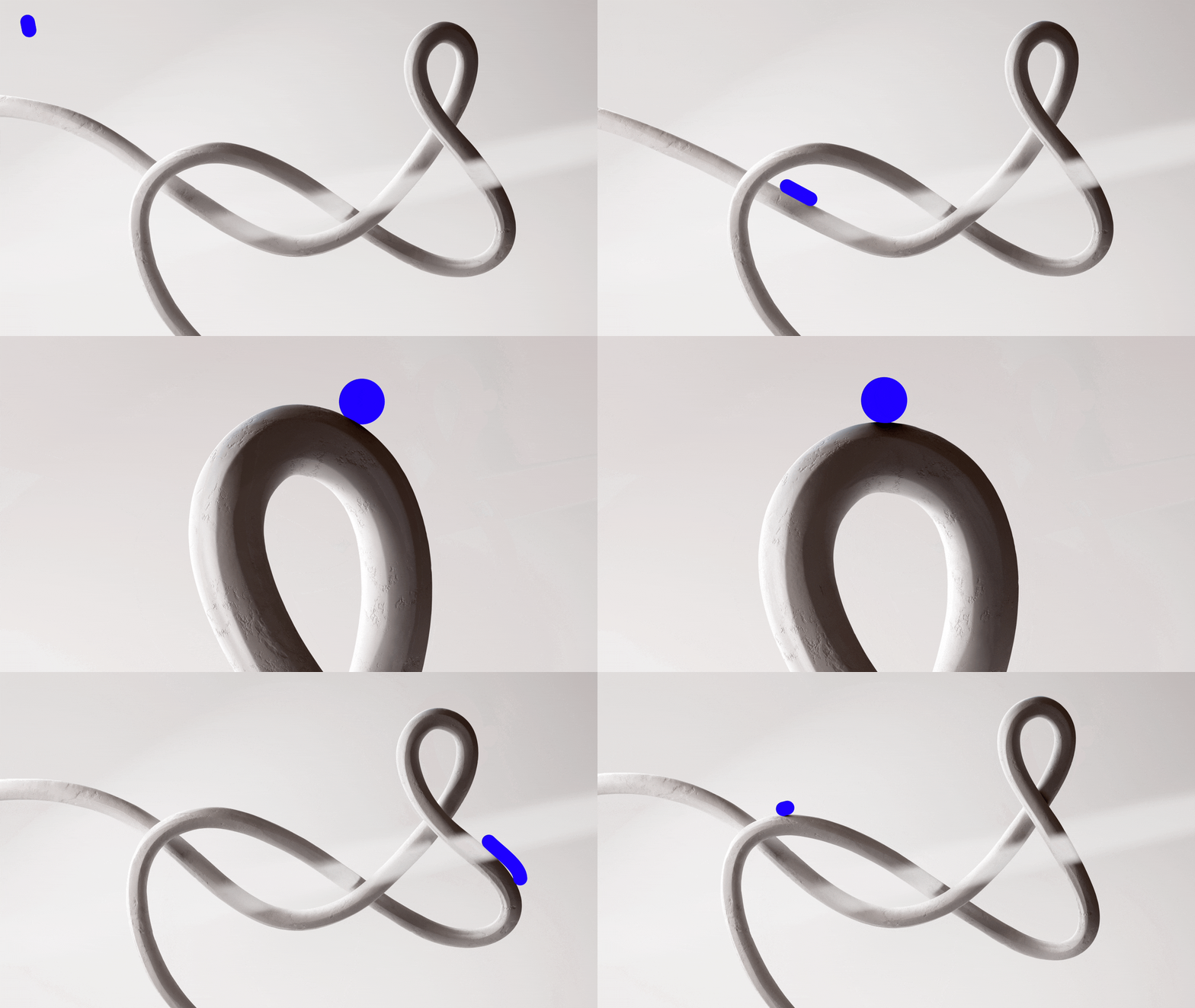
Translating brand personality into physical movement
Physics in motion design establishes strategic resonance. Human reaction to movement is a biological constant. Brand teams must trust their gut feeling to determine if a movement feels premium or jarring.
Partnering with a specialised studio translates a brand’s personality into a tangible physical reality. Using physical principles as a toolkit ensures the brand’s energy flows seamlessly. Mastering these invisible rules transforms abstract ideas into polished experiences that the audience watches and feels.
"I guess that’s why we like animation, because you can do anything. It isn’t like normal life; you can break physics, and that’s the beauty of it. You can be playful." - Nick, Motion Designer
FAQ Summary
How does physics affect motion design?
Physics dictates how audiences instinctively read movement. Logical acceleration and consistent weight make a brand feel confident and intentional.
Why does poor motion design damage brand trust?
Unnatural movement creates subconscious discomfort. The audience focuses on the visual abnormality instead of the brand message, which lowers engagement and makes a premium product feel cheap.
Can brand motion design break the rules of physics?
Yes, animation allows for unconventional storytelling. Breaking physics works effectively when the movement carries a clear intent and a consistent stylistic choice.